
It’s like an annual event. Every year, we hear the same doomsday prediction — reading habits are on the decline and physical books are on the path to extinction. First, it was the internet. Then, when eBook readers came into the picture, pundits declared that the days of physical books were over. Some even went to the extent of stating that the entire segment of commercial printing is dead.
But empirical evidence says otherwise. Look at the installation of digital and inkjet presses, plus binding machinery last year — there have been hundreds of installations, and if you ask print services providers making these investments, they would tell you, the demand for the printed book is on the rise. Here is the catch. The SKU numbers are shrinking. Unlike the good ol’ days, when we needed to print a minimum of 1,100 copies of a book in offset, in digital, you can print any number of copies, from one to upwards of 1,000. This affords more freedom. So, more books. The result: shorter print-runs but more SKUs. It adds to the number.
Let’s look at the numbers. India is the third largest English language publishing market in the world after the USA and the UK, and the sixth largest globally. Dominated by printing (with digital streaming growing), it has a market value of USD six to seven-million. India has over 21,000 registered publishers, ranging from multinational subsidiaries to small regional presses. Every year, the country produces 90,000 to 1,00,000 new titles, in more than 20 languages.
According to the Raja Rammohun Roy National Agency for ISBN, which issues International Standard Book Number (ISBN), the institute has 91,732 registered users (comprising publishing houses and individual authors) and has allotted 27,97,197 ISBNs. That means 27,97,197 books in the market. In a recent webinar hosted by PrintWeek, Tony Paguirigan of HP said, “In India, revenue in the books market is projected to reach USD 5.83-billion in 2025. This comprises USD 440-million from audiobooks, USD 260-million from eBooks and the bulk of it from physical books, reaching USD 5.13-bilion. Revenue in this market is expected to exhibit an annual growth rate (CAGR 2025-2030) of 3.04%, leading to a projected market volume of USD 6.78-billion by 2030.” In the same event, Ashok Pahwa of HP highlighted that vernacular and regional languages are accelerating, fuelled by the National Education Policy. NCERT reports a 40% surge in Hindi and Tamil textbook editions. He also said that backlist strength matters. “Books older than a year still represent 60–70% of sales in trade publishing, showing titles retain long shelf lives,” he said. Of course, edition books will continue to be in demand.
With 65% of India’s population under 35, a dynamic, youthful market drives both print and digital growth. For example, NCERT printed 15-crore books in 2024, nearly three times its previous output, to serve 248-million K12 students enrolled in 2023–24. This surge highlights the scale of textbook printing and the need for publishers to expand production capacity. What about trade books, books for the general public published by both multinationals and small independent publishers? But before that, here is the latest doomsday prediction. The Guardian saga Recently, the British news outlet, The Guardian, published a story on the rise of literary festivals in India, questioning why there should be so many lit fests when the general public is not actually reading. The gist of the pieces is the same old story — reading habits are on the decline.
 |
|---|
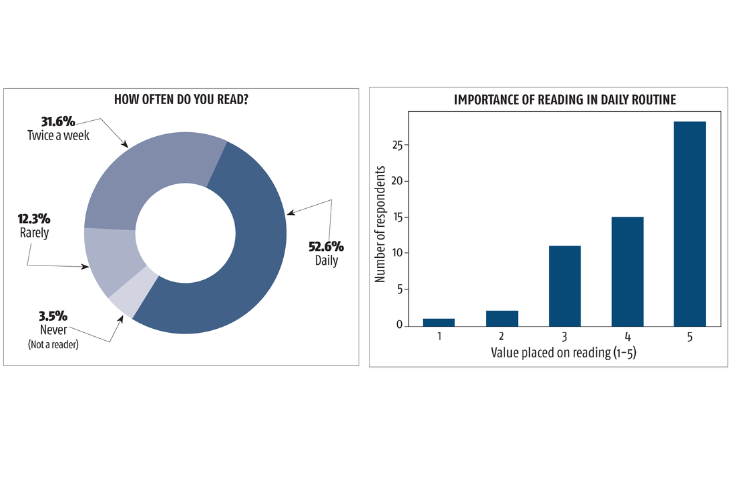
| PrintWeek conducted a survey of 157 respondents. The responses suggest that reading habits remain active. Nearly 85% of respondents read at least weekly, indicating that the sample group is strongly inclined toward reading. The audience is clearly reading-active rather than casual. 43 out of 57 respondents, nearly 75%, rated reading as an important part of their daily life. The sourcing responses show a clear trend: Readers still show a strong preference for physical copies rather than purely digital reading. The ecosystem for reading has shifted from traditional bookstores to platform-based discovery and purchasing. Libraries remain part of the reading ecosystem but are not the primary access point for most readers |
When The Guardian piece began circulating online, it triggered an immediate backlash. Many argued that the piece did not reflect the reality of reading in India. My first reaction was similar. The headline felt provocative, even dismissive of India’s reading community. What it did manage to evoke was a question that needs further probing. While writing this article and speaking to people across the publishing ecosystem, I noticed that The Guardian has reported similar concerns elsewhere. In recent years, it ran headlines such as ‘Deeply concerning’: reading for fun in the US has fallen by 40%’, new study says’ and ‘More than a third of UK adults have given up reading for pleasure, study finds’. In those cases, the framing clearly referred to studies and did not question the reading community in those countries. The India story initially appeared different. The headline originally read: “Most Indians don’t read for pleasure – so why does the country have 100 literature festivals?” The framing suggested commentary and a sense of authoritativeness, rather than research. William Dalrymple, historian, author, and co-founder of the Jaipur Literature Festival, pushed back against the claim on social media. Sharing a post on X, he described the article as “irritating and ignorant”, arguing that literary sessions at the Jaipur Literature Festival are consistently packed with enthusiastic young readers. He added that authors frequently report some of the longest signing queues of their careers at the festival, noting that more than 44,000 books were sold during the five days of the most recent edition. Eventually, The Guardian amended the headline. Yet the debate it triggered remains worth examining.
Are reading habits actually declining?
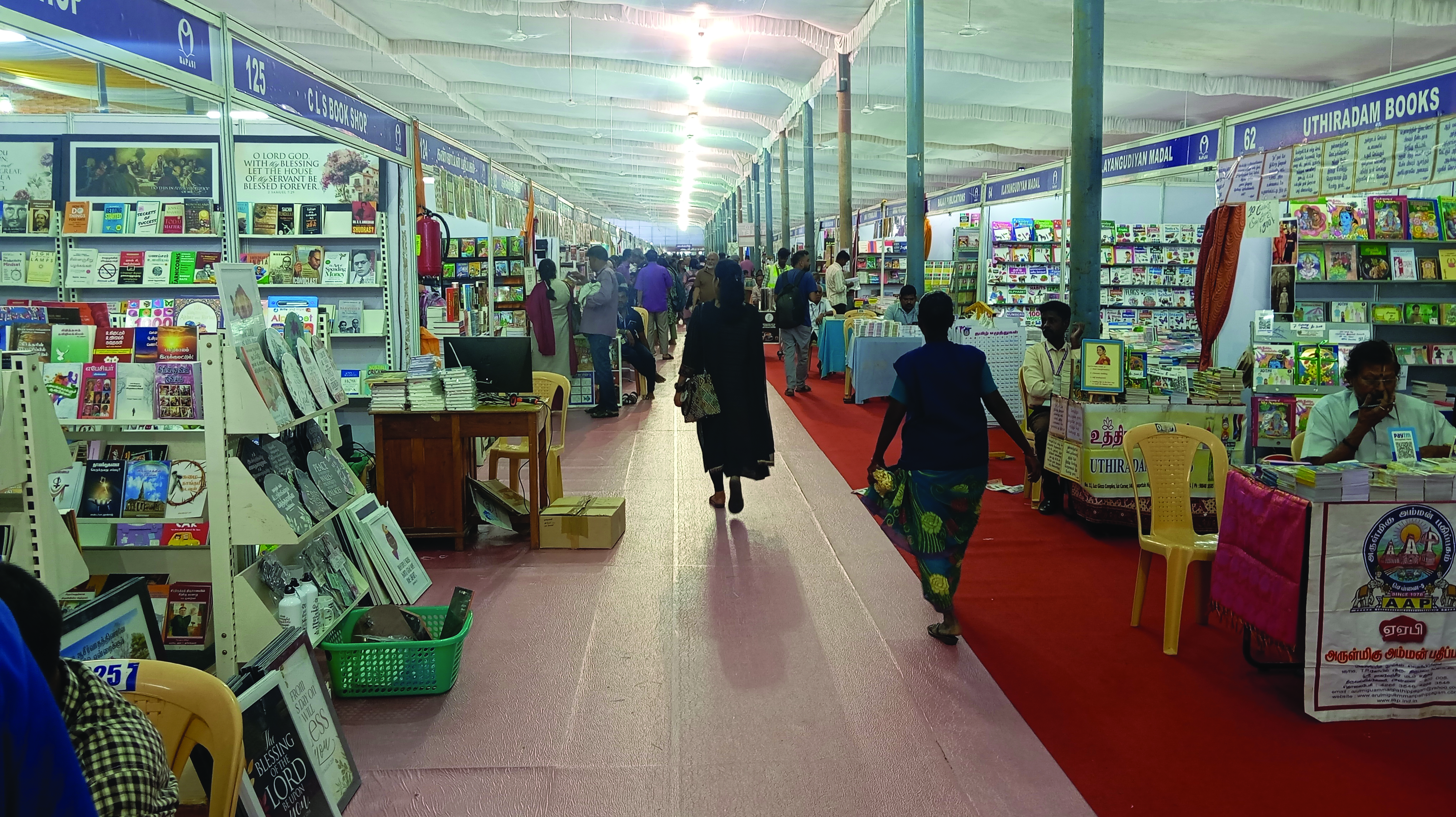
The central argument of the article remains that literary festivals are needless. The International Kolkata Book Fair, one of the world’s largest public book fairs, routinely attracts millions of visitors. The 2026 edition drew around 32-lakh visitors and reported book sales of approximately INR 26.4-crore. In the south, the Chennai Book Fair, organised by the Booksellers and Publishers Association of South India (BAPASI), steadily attracts around 20-lakh visitors.
Meanwhile, the New Delhi World Book Fair continues to draw large crowds in the north, with organisers reporting more than two-million visitors over the nine-day event at Bharat Mandapam in both 2025 and 2026.
Journalist Vinutha Mallya believes the article captures one part of the picture. “The Guardian article does reflect reality. I did not think it was driven by outdated assumptions. It reflects a particular reality located in a diverse culture that cannot be captured adequately by a single narrative.”
India has a population of 1.47-billion people, with roughly 65% under the age of 35. Against that backdrop, the publishing statistic cited in the article — that 10,000 copies can qualify as a bestseller — inevitably raises questions. The Guardian relied on figures shared by publishers. Those numbers cannot be dismissed outright. Yet they also do not represent the entire ecosystem. What began as a reaction to the article gradually turned into a broader exercise in reflection: Is reading declining in India, or are we looking at the wrong indicators?
For P Sajith, managing director, Impel Services, who works closely with production and shop-floor data, the picture looks less alarming. “Large publishers such as Penguin Random House India and Hachette India continue to invest selectively, curate lists carefully, and support strong authors and categories. What we are seeing is consolidation and refinement, not retreat.” He also points to continued engagement outside metropolitan centres.
“Festivals, author tours and reader communities in tier-II and tier-III cities suggest that engagement remains healthy, even if consumption patterns have shifted.” From his perspective, the conversation around a supposed crisis in reading may be overstated.
The language question
One question surfaced repeatedly during conversations — in what language does India read? Several observers felt The Guardian article treated English readership as a proxy for the country’s entire reading culture. That assumption overlooks the scale and vitality of regional language publishing.
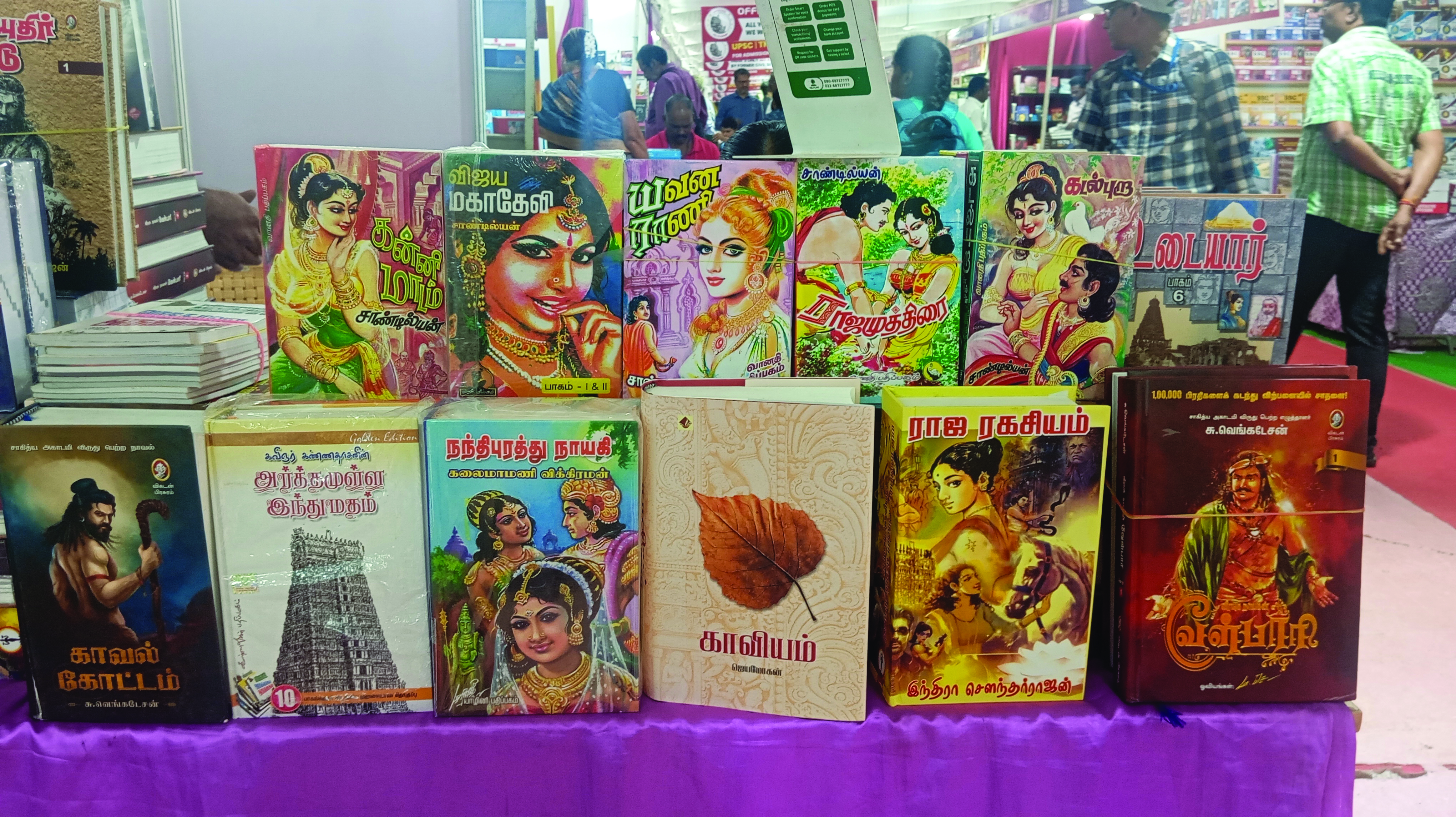
Mallya points to literary activity across the country that rarely appears in national conversations. “For many authors, festivals are a moment in the sun they may not have experienced before. For publishers, they are dependable avenues for branding and marketing. But there are also countless other spaces where books are discussed and debated.” She points to gatherings such as sahitya sammelans in Patna, Lucknow, Bhopal and Kolhapur, literary events in Kerala, and book fairs across Tamil Nadu and Bengal.
“In many of these places, readers actively engage with authors and ideas in languages other than English. These conversations often sit outside the visibility of elite literary spaces.” Ahalya Naidu, co-founder of Trilogy Bookshop and Library, sees literary events as one of the entry points to reading. “Large-scale literary festivals and chain bookstores are as essential to the reading ecology are small book clubs, curated indie bookshops or personal interactions with writers. Each serves a different audience.” She notes that state book fairs frequently report strong sales and heavy footfall.
Running a library and bookstore provides Naidu with direct insight into how readers make decisions. Among English-language readers, she observes hybrid reading habits. A single title may be consumed as a physical book, an eBook, an audiobook or on the phone, depending on availability and design. Production quality influences purchasing decisions — small font sizes, thin paper or weak cover design can push readers towards digital versions.
Discoverability remains another major challenge. Many readers enter bookstores wanting to read something but are unsure where to begin. Bestseller displays often narrow the perceived choice to a handful of titles. The media landscape offers little consistent coverage of literature, particularly for younger readers.
As a result, readers rely heavily on social media recommendations, where marketing noise often overwhelms thoughtful discussion. Availability can also become an obstacle. In India, booksellers lack a centralised metadata system comparable to those in the UK or the USA. Tracking release dates, editions and pricing often involves manual processes and uncertain information. When a reader cannot find a title easily, they frequently turn to online retailers or digital downloads instead. This is the reason why Naidu believes that the numbers and data might not accurately reflect the reality in India.
Self-publisher Ritesh Uttamchandani views the question of reading for pleasure through three lenses: habit, economics and social context. He believes digital media has gradually altered how people consume information. In urban spaces, he recalls regularly seeing commuters reading books, magazines or photocopied texts on trains.

Today, most passengers are absorbed in their phones. Some may still be reading PDFs or eBooks, yet the visible culture of reading has changed. Often, the question of reading is connected to preserving the cultural heritage. Writing about the rise and struggles of Marathi publishing, Prasad Gangurde of Haymarket says, “The importance of the physical book transcends market dynamics. A recent seminar on Marathi publishing at the Jaipur Literature Festival crystallised the case for print as an indispensable act of cultural preservation. The physical world, it was argued, is the vessel that holds a 2,500-year-old tradition and the tangible artefact that grounds a culture against the fleeting currents of global change.
Gangurde adds, “This is a commitment that manifests in monumental projects, such as the ongoing compilation of a comprehensive dictionary covering the state’s 216 dialects — a powerful act of linguistic mapping that acknowledges Marathi’s cosmopolitan history, having adopted words from 35 foreign languages. Historically, the printed word has been an instrument of political and cultural awakening. In the 19th century, in contrast to the painful inferiority complex that led some leaders to denigrate Sanskrit, scholars like Mahadev Moreshwar Kunte and Krishnashastri Chiplunkar consciously used print — through the publication of Marathi epic poems on Chhatrapati Shivaji Maharaj — to stir a sense of self-respect and lay the groundwork for a broader cultural awakening.”
Where does the issue lie?
When asked whether the challenge lies in readership, access, pricing or visibility, most respondents felt the issue cannot be reduced to a single factor. Mallya says the pressures facing the sector are layered. “That is all of it. We have more books, writers, readers, publishers and printers than before, but the sector faces financial and structural challenges.”
She points to limited capital, high input costs and GST, logistical hurdles, weak policy support and uneven use of public resources, all of which shape how books are produced, distributed and sold. From the perspective of an independent publisher, Uttamchandani argues that discoverability and distribution remain persistent barriers. Even extensive media coverage does not guarantee sales, which means authors and publishers often have to amplify that visibility themselves through social media promotion. He also highlights structural issues in retail distribution, particularly the consignment model used by many bookstores.
Large publishers can absorb the risk of unsold inventory, but independent publishers cannot because every copy represents a significant investment. Uttamchandani adds that while social media once helped readers discover new creators, algorithms, and the dominance of short-form content now push such discoveries into a crowded stream of entertainment, where interest does not always translate into a purchase.
The bookmaker’s perspective
For Sajith, the signals coming from bookbinding and production lines show how the industry is adapting to changing demand. Print runs are becoming shorter but more frequent as publishers seek faster turnaround and lower inventory risk. Production formats are shifting as well, with lighter bindings, optimised pagination and cost-balanced material choices becoming more common, though these adjustments sometimes challenge traditional bookbinding workflows.
At the same time, logistics have grown more decentralised, with regional warehouses and distributed printing networks allowing books to travel shorter distances while reaching wider markets. Turnaround expectations have tightened considerably. “Speed is now as critical as cost,” Sajith says. On the shop floor, this shift appears in higher job diversity, shorter average print runs, more frequent changeovers and increasing pressure on efficiency and automation. Education publishing and regional language titles continue to drive strong production volumes. “The industry is not slowing down,” Sajith says. “It demands a different operating mindset.”
The publisher’s perspective For Rajnish Shirsat, founder of BookMyStory, print publishing in India has not simply survived the digital shift — it has evolved. Advances in digital printing, print-on-demand and improved distribution systems have made publishing more flexible. At the same time, the rise of self-publishing, independent authors and AI-assisted writing tools has expanded who can participate in the publishing ecosystem.
HarperCollins India chief executive officer Anantha Padmanabhan also responded to the debate on LinkedIn, arguing that the article had misread the role of literary festivals. He noted that the “Indians don’t read” argument often relies on figures drawn from English literary fiction, where average print runs remain modest.
Meanwhile, several titles have achieved far larger sales in recent years, including the Malayalam novel Ram C/O Anandhi by Akhil P Dharmarajan, which has sold around 3,00,000 copies. For Padmanabhan, these examples point to a market where readers are still discovering genres and authors, and where value-conscious buying behaviour shapes how books are chosen.
Digital formats offer convenience and portability. Yet Shirsat believes committed readers continue to favour physical books.“The experience of holding a printed book, turning pages and building a personal library still carries emotional value.” He also sees growing confidence among publishers investing in trade and leisure titles. Social media content may be brief and fleeting. Books allow deeper exploration of ideas and experiences.