


The rise of books in March issue of PrintWeek
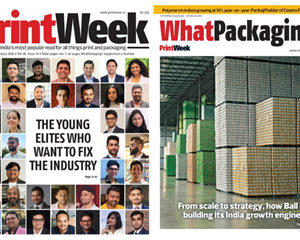
The March issue of PrintWeek explores the rise of books as a powerful growth segment for print, alongside developments shaping the industry — from Manroland Sheetfed’s restructuring and new press installations across India to innovations in packaging, digital print, and materials research. The issue also tracks trends in the paper sector and the launch of the PrintWeek Digital Print Awards, celebrating India’s digital print entrepreneurs.
17 Mar 2026 | By PrintWeek Team

In the cover story, Sai Deepthi argues that physical books are here to stay, despite all doomsday predictions.
PrintWeek conducted a small survey of 57 respondents. The responses suggest that reading habits remain active. Nearly 85% of respondents read at least weekly, indicating that the sample group is strongly inclined toward reading. The audience is clearly reading-active rather than casual. 43 out of 57 respondents, nearly 75%, rated reading as an important part of their daily life. The sourcing responses show a clear trend: Readers still show a strong preference for physical copies rather than purely digital reading. The ecosystem for reading has shifted from traditional bookstores to platform-based discovery and purchasing. Libraries remain part of the reading ecosystem, but are not the primary access point for most readers
As Marathi grapples with shrinking bookshops and a vanishing reading culture, writers, publishers and policymakers confront a pressing question: can a language with a rich literary past reinvent itself? Prasad Gangurde writes
In the 'Industry' section, a new generation of printers takes the microphone at Print and Beyond and discovers that the future of the industry may already be running the presses. Noel D’Cunha reports.
P Sajith reframes print as a geography business. With 2.5-billion textbooks printed annually, smartphone exports crossing 30-billion dollars, and digital enabling hyperlocalisation, the industry must choose its distance with care.
MOS managing director and AIFMP secretary says creativity thrives under constraint, AI demands learning not panic, and collaboration can unlock growth.
Preeti Mishra of Holosafe Security Labels decodes operational rigour, brand protection, variability and why systems will define the next decade.
Why Pulkit Chhaparia believes niche focus is the only defence in a deglobalising packaging world.
At Heidelberg’s Networking Summit in Mumbai, brand owners and packaging service providers debate how print packaging now anchors identity, trust and value across retail, eCommerce and quick commerce. A PrintWeek report in the ‘Technology’ section.
From its origins as a single corrugation unit serving Jalandhar’s sports goods industry to a fully integrated corrugated packaging manufacturer with a national footprint, Pioneer Mega Printers has grown through timely technology investments, Sai Deepthi reports.
From offset presses to sleeve-based flexo, Indian-built kit is no longer just filling the gap; it’s setting the pace. Report by Noel D’Cunha and Rahul Kumar in the ‘Focus’ section.
Souvik Bhattacharjee, director of Kolkata-based Swapna Printing Works, shares his journey, from childhood to leading the family business, embracing technology and growing as an entrepreneur.
From Bengaluru to Varanasi, print entrepreneurs are blending digital muscle with handcrafted precision to build resilient, high-value businesses. Vimal Parmar’s principles capture the mindset driving India’s print renaissance.
Sir Martin Sorrell says AI is decimating creative costs. In an interview with Vinita Bhatia of Campaign India, S4 Capital’s executive chairman says hyperscalers’ USD 600-billion AI capex shift is breaking the profit–agency revenue link.
These and more in the March issue of PrintWeek.






 See All