

7 - The Aftermath and Civic Uprising
7.1 The Changing Era
Any change in the social order isn’t easy to comprehend let alone analyse. What merely began as a printing revolution in Europe soon snowballed into a movement which led to the Renaissance. All previous revolutions had either been religion centric or kingdom centric where society changed in accordance to the new conqueror. However in the Renaissance, mental liberation was as important as personal freedom; the ability to question the Church’s authority and challenge established norms liberated mankind from prior shackles. Gutenberg’s simple printing evolution brought about a revolution which empowered individuals and brought the Church’s supremacy to an end.
The Renaissance was responsible for a hitherto unseen golden era in Europe’s history; it led to landmark changes in the society which went on to define the present global world order. The impact of the Renaissance may not seem very remarkable in the present day context since science and civil liberty have moved ahead by leaps and bounds. To imagine that the only thing Europeans read for more than a thousand years was the Bible and other religious fables seems ridiculous to the current generation which is exposed to a wide range of comic books, magazines dealing with every topic under the sun, newspapers that highlight global events as well as websites that offer information at a startling rate. In those times, even the mention of such literature would be enough to get you labelled as the anti-Christ and lead you to be burned alive at that stake!
The Renaissance was responsible for a hitherto unseen golden era in Europe’s history; it led to landmark changes in the society which went on to define the present global world order. The impact of the Renaissance may not seem very remarkable in the present day context since science and civil liberty have moved ahead by leaps and bounds. To imagine that the only thing Europeans read for more than a thousand years was the Bible and other religious fables seems ridiculous to the current generation which is exposed to a wide range of comic books, magazines dealing with every topic under the sun, newspapers that highlight global events as well as websites that offer information at a startling rate. In those times, even the mention of such literature would be enough to get you labelled as the anti-Christ and lead you to be burned alive at that stake!
Hence, to simplify the achievements of the Middle Ages would be ridiculous and equally uncharitable. The effects of the Renaissance not only touched all societal spheres and created new avenues - be it in art, scholarship and science - but it also created appreciation for ancient culture coupled with modern intellect. This was one of the few revolutions that featured negligible bloodshed, witnessed no kingdoms being overthrown and saw no change of state religion; revolutionary in itself since
all these activities had become the norm in Jerusalem following the crusades. Currently, we can only assess the impact it had on the populace - imagine arming prehistoric man with a gun who, until then, had considered the spear to be the world’s mightiest weapon.


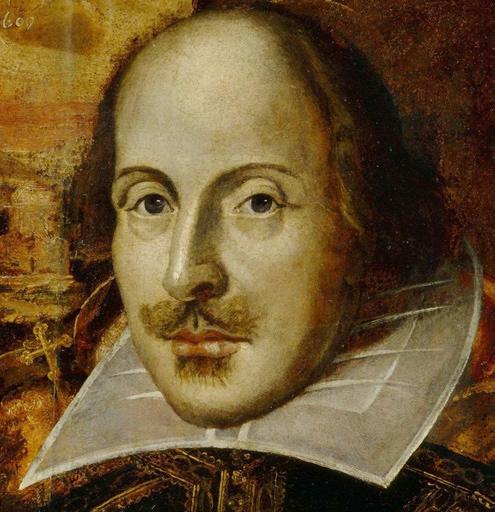
Leonardo da Vinci William Shakespeare

Cassandra Fidelis
Cassandra Fidelis
Italy took the lead in commencing and developing the Renaissance movement; the baton was eventually handed over to Germany and France, England and Spain. Logically Germany should have undergone intellectual awakening first since it was Gutenberg’s native country. But, as evidenced by other historical events, the pioneers are not always direct change makers. A similar scenario unfolded in later centuries when USA recognized the potential of communication devices and took over the mantle from the European nations where they were first developed. Though the revolution technically started in Germany through Gutenberg’s printing press, Italy soon began organising the core fundamentals of modern spirit. Italy was the natural leader in the Renaissance due to its inheritance of the erstwhile Roman civilization. It already possessed an established language, political freedom and commercial prosperity at a time when many other European nations were still barbarous and unmarked.
In the beginning, the real pursuit of the Renaissance was intellectual freedom and not liberation from the existing ruling order. The mental condition of the medieval population reflected tribal practices; the only difference was that this tribe comprised of the whole continent. Here the Church was the sole authority and the rest of the general public wasn’t even allowed to think freely let alone express opinions. During these centuries, the nations of Europe were restricted by the brutal want of material necessities. Once the great Plague hit the continent, people where just happy to be alive! The winds of change were also blowing in the Americas as the great Inca and Aztec civilizations fell under Spain’s knife. In the 15th century, China saw the restoration of its great wall and India witnessed further consolidation of the Mughal rule. Other European powers like Russia got the murderous Ivan ‘The Terrible’ as their czar while the Dutch, Portugese and English kept crossing swords with each other over their colonial pursuits.
In the beginning, the real pursuit of the Renaissance was intellectual freedom and not liberation from the existing ruling order. The mental condition of the medieval population reflected tribal practices; the only difference was that this tribe comprised of the whole continent. Here the Church was the sole authority and the rest of the general public wasn’t even allowed to think freely let alone express opinions. During these centuries, the nations of Europe were restricted by the brutal want of material necessities. Once the great Plague hit the continent, people where just happy to be alive! The winds of change were also blowing in the Americas as the great Inca and Aztec civilizations fell under Spain’s knife. In the 15th century, China saw the restoration of its great wall and India witnessed further consolidation of the Mughal rule. Other European powers like Russia got the murderous Ivan ‘The Terrible’ as their czar while the Dutch, Portugese and English kept crossing swords with each other over their colonial pursuits.
However, poetic, scientific, artistic and other liberal pursuits within Europe soon took a revolutionary turn when the oppressed began demanding their rights. This can be correlated to the events of the second renaissance in recent times where the liberty attained through Internet communication was used to topple authoritative regimes in the Middle East through the ‘Jasmine Revolution’. A series of civil wars in England, being fought for control of the throne, was also given a flowery connotation and called ‘The War of the Roses’. Although, this 15th century conflict represented a feudal fight more than a class war, it provided the soldiers and parliamentarians with an impetus to escalate the suppressed discontent into a full-fledged civil war. (01)
7.2 The English Civil War
Ever since man became aware of the scarcity of resources, wars have been a common sight throughout human history; it started off as turf battles between tribes, moved on to include neighbouring fiefdoms and eventually kingdoms. By the early 11th century, wars were fought on the basis of religions in the form of the crusades. After the Renaissance, the scope of conflicts changed. They included wars of identity fought amongst the French and the English (the Hundred Years War) and inter-faith conflicts among Catholics and Protestants that took place in France (Huguenot wars). Some battles led to the formation of new states and the strengthening of regional or religious groups. The ripples of the Renaissance spread across Europe and had great implications in Britain.
It may have started as an artistic movement empowering a few individuals, but its real impact lay in its ability to empower the masses. The Renaissance changed people’s mindsets; it provided them with the reassurance that their destiny was not pre-decided and the role of the Church and the ruling elite could be challenged and curtailed. The English Renaissance, as it is termed, was a cultural and artistic movement stretching from the early 16th century to the early 17th century. Even today, although the British Empire’s dominance is long gone, the position of English as a favoured language and Britain’s exemplary parliamentary module is widely acknowledged.
It may have started as an artistic movement empowering a few individuals, but its real impact lay in its ability to empower the masses. The Renaissance changed people’s mindsets; it provided them with the reassurance that their destiny was not pre-decided and the role of the Church and the ruling elite could be challenged and curtailed. The English Renaissance, as it is termed, was a cultural and artistic movement stretching from the early 16th century to the early 17th century. Even today, although the British Empire’s dominance is long gone, the position of English as a favoured language and Britain’s exemplary parliamentary module is widely acknowledged.
Understanding this conflict is important since it was one of the first attempts by the masses to garner equal rights from the aristocracy; the movement was inspired by the freedom of thought that the Renaissance encouraged.
The English King Charles I was not exactly an astute ruler and he faced numerous debacles since he took charge. Right from the beginning of his reign, Charles I had been engaged in conflict with the Parliament. His belief in the divine right of kings meant that he opposed any attempt by the Parliament to restrict his authority. His marriage to Henrietta Maria of France antagonised local Protestants since she was a Roman Catholic.(04) This coupled with his troubles with Protestants in Scotland and Catholics in Ireland led to disputes and riots across the kingdom. Things reached a boiling point when Charles dissolved the Parliament after they demanded limits on his right to levy customs and protested his over taxation policies and failed wars with France and Spain. However, this did not lead to open conflict. The Parliament closed down in 1629 only to reopen in 1641 as the King needed additional finances to fight the Scottish war. But the parliamentarians wanted their own demands to be met first and presented Charles with a list of grievances, called the Grand Remonstrance.(01) The King did what any levelheaded monarch would have done under the circumstances – he ordered a legion of soldiers to attack the Parliament and arrest the M.Ps.

(John Locke and his writing – “Two Treatises of Government”)
Fortunately for them, they had already fled thanks to prior warning. In June 1642, the Parliament passed a new set of demands called ’The Nineteen Proposals’ which clamoured for the curtailment of the King’s power by increasing the role of the Parliament in governance. This move was not met with unanimous approval; it divided the Parliament into those who supported the Nineteen Proposals and those who were loyal to the King. Very soon war became inevitable; both the Parliament and King Charles raised their own armies and civilians were forced to choose sides.
The English King Charles I was not exactly an astute ruler and he faced numerous debacles since he took charge. Right from the beginning of his reign, Charles I had been engaged in conflict with the Parliament. His belief in the divine right of kings meant that he opposed any attempt by the Parliament to restrict his authority. His marriage to Henrietta Maria of France antagonised local Protestants since she was a Roman Catholic.(04) This coupled with his troubles with Protestants in Scotland and Catholics in Ireland led to disputes and riots across the kingdom. Things reached a boiling point when Charles dissolved the Parliament after they demanded limits on his right to levy customs and protested his over taxation policies and failed wars with France and Spain. However, this did not lead to open conflict. The Parliament closed down in 1629 only to reopen in 1641 as the King needed additional finances to fight the Scottish war. But the parliamentarians wanted their own demands to be met first and presented Charles with a list of grievances, called the Grand Remonstrance.(01) The King did what any levelheaded monarch would have done under the circumstances – he ordered a legion of soldiers to attack the Parliament and arrest the M.Ps.
(John Locke and his writing – “Two Treatises of Government”)
Fortunately for them, they had already fled thanks to prior warning. In June 1642, the Parliament passed a new set of demands called ’The Nineteen Proposals’ which clamoured for the curtailment of the King’s power by increasing the role of the Parliament in governance. This move was not met with unanimous approval; it divided the Parliament into those who supported the Nineteen Proposals and those who were loyal to the King. Very soon war became inevitable; both the Parliament and King Charles raised their own armies and civilians were forced to choose sides.
John Locke and his writing –
“Two Treatises of Government”
It was during this conflict that John Locke, known as the Father of Classical Liberalism, was born on August 29, 1632. His father was a country solicitor and small landowner who served as a cavalry captain in the Parliamentary army during the Civil War. His father’s alignment with the parliamentarians inspired Locke to write against autocracy.
Later Locke came to be regarded as one of the most influential enlightenment thinkers; he was considered to be one of the first British empiricists along the lines of philosopher Francis Bacon. His work greatly impacted the development of modern political philosophy. His writings influenced the likes of French philosophers like Voltaire and Rousseau as well as Scottish thinkers and the American revolutionaries. His contributions to republican and liberal theory are inherently visible in the American Declaration of Independence. Locke lived through one of the most extraordinary centuries of English political and intellectual history.
His observations on the conflicts between monarchies and parliaments and those between religious groups shaped his thought process to a large extent. His monumental work An Essay Concerning Human Understanding talks about mankind’s understanding of god and his surroundings. Locke also wrote a variety of important political and religious books, considered to be some of his best work; these include - Two Treatises of Government, The Letters Concerning Toleration, and The Reasonable ness of Christianity.
The ensuing Civil War lasted till 1651 and split English society at various levels. On monarchy’s side were the aristocracy, a section of peasants, the Anglican Church and Catholics. Whereas, the new commercial classes, the navy and the Puritans supported the Parliamentarians. The war lasted for thirty years and dragged towards its conclusion with the Parliamentarians eventually winning the right for complete governance of Britain. This victory sounded the death knell for the monarchy’s absolute power elsewhere as well; its ripples later moved to France. This period also saw the rise of Locke whose preachings and following would only grow with time. (02)
Later Locke came to be regarded as one of the most influential enlightenment thinkers; he was considered to be one of the first British empiricists along the lines of philosopher Francis Bacon. His work greatly impacted the development of modern political philosophy. His writings influenced the likes of French philosophers like Voltaire and Rousseau as well as Scottish thinkers and the American revolutionaries. His contributions to republican and liberal theory are inherently visible in the American Declaration of Independence. Locke lived through one of the most extraordinary centuries of English political and intellectual history.
His observations on the conflicts between monarchies and parliaments and those between religious groups shaped his thought process to a large extent. His monumental work An Essay Concerning Human Understanding talks about mankind’s understanding of god and his surroundings. Locke also wrote a variety of important political and religious books, considered to be some of his best work; these include - Two Treatises of Government, The Letters Concerning Toleration, and The Reasonable ness of Christianity.
The ensuing Civil War lasted till 1651 and split English society at various levels. On monarchy’s side were the aristocracy, a section of peasants, the Anglican Church and Catholics. Whereas, the new commercial classes, the navy and the Puritans supported the Parliamentarians. The war lasted for thirty years and dragged towards its conclusion with the Parliamentarians eventually winning the right for complete governance of Britain. This victory sounded the death knell for the monarchy’s absolute power elsewhere as well; its ripples later moved to France. This period also saw the rise of Locke whose preachings and following would only grow with time. (02)
7.3 The American War of Independence
The American war of Independence presents the first instance where the spirit of the Renaissance moved out of Europe and thus shaped the modern history of the free world. This movement held great reverence for the English Civil War. It hoped to create an independent parliamentary system of its own, a goal in which the country eventually succeeded. It’s not ironical that America was discovered by an Italian explorer Amerigo Vespucci and thus owes it birth itself to the Italian Renaissance. Though America started as a British colony, it had a distinct set of inhabitants which included the unmarried, the Puritans, the working class, convicts and the Freemasons.
These people wanted to start afresh and achieve what they were prohibited from in Britain. With the success of the civil war movement in the mainland, their ambitions grew. Just like the English Civil War, the American conflict was also driven by the ideological movement and was led by Thomas Paine.
These people wanted to start afresh and achieve what they were prohibited from in Britain. With the success of the civil war movement in the mainland, their ambitions grew. Just like the English Civil War, the American conflict was also driven by the ideological movement and was led by Thomas Paine.

Paine was one of the most notable ideologues of the American Revolution. He started from where the English thinker John Locke ended. His ideals appeared in writing as Common Sense and were widely distributed and read aloud in public gatherings; this greatly contributed to the ideals of liberty and the formation of a new republic. (01) It was this literature which created a wave of demand for separation from Britain and encouraged people to join the continental army. The core concept of Common Sense lay in showcasing a future in which the readers where compelled to make a choice between fighting the threat of tyranny and accepting it. The period of American enlightenment was a precursor to the American Revolution. It was a collective belief in the concepts of liberty, equality, republicanism and religious tolerance which inspired the colonists to seek a change in regime. (02)The American war of independence started in 1775 and concluded in 1783 with the defeat of the British Empire. The war was bloody, multifaceted and was not only played out on the territorial front but also on the ideological one. The war gave the world military stalwarts like George Washington and Thomas Jefferson along with ideologists like Paine and innovators like Benjamin Franklin. A combination of all these factors makes this conflict unique to our present history. As this book focuses more on ideologues and innovators than on military strategists, we have to gloss over Washington and Jefferson and pay attention to Franklin.
Franklin remains one of the most unique contributors to modern civilization, both as a free thinking ideologue and as an inventor, who radically changed the way we exist. He was one of the founding fathers of the United States and a man of multiple talents. He was a leading author, printer, politician, scientist, musician, inventor, satirist, civic activist, statesman and diplomat. He played a critical role in the field of science through the discovery of electricity. He was instrumental in forming the first public lending library in America. He went on to earn the title of “The First American” as he exemplified the emerging American nation. Franklin was fundamental in defining the American ethos and democratic values of hard work, education, community spirit and self-governing institutions with a scientific temperament. His life and initial days are equally inspiring to read about. At the tender age of 15, he started The New England Courant, the first “newspaper” in Boston. By 1749, his famous kite experiment verified the nature of electricity and catapulted him to fame. Soon, he moved into politics. Though he was a firm proponent of the English Empire in his early days, he later started contemplating America’s independence which made him dear to the French. (03)
Due to his popularity, the French government signed a Treaty of Alliance with the Americans and proceeded to sign the Treaty of Paris in 1783 that ended the American Revolutionary War. (03) He went on to serve as a delegate to the Constitutional Convention and signed the Constitution; his final public act was drafting the Anti-Slavery Treatise in 1789. (04) After gaining Independence from the British Empire, the Americans further refined the parliamentary system by creating a civil charter based on humanitarian values - a charter which is still considered a landmark contribution to democratic evolution. It was only after this revolution that other nations started considering democratic and electoral politics. The American constitution and its civil charters, including the First Amendment, made it the ideal free nation for others to emulate. A part of the Bill of Rights, the First Amend ment prohibited the establishment of one state religion and gave further leverage to freedom of speech, religion, press, privacy and stance with government agencies. Till date the ideals of free society, free market and the best of the modern communication tools have emerged from America. The American Revolution led to a chain reaction across the Atlantic, fuelling unrest in Haiti, Latin America, Ireland and notably France, which was responsible for the bloodiest revolution of all. This was one of the first successful revolutions against a European empire, and the first successful establishment of a Republican form of democratically elected government. It provided a model for many other colonial people who realized that they could break away too and become self-governing nations with a directly elected representative government. (02, 05)

{Benjamin Franklin (center) at work on a printing press}
7.4 The French Revolution
{Benjamin Franklin (center) at work on a printing press}
7.4 The French Revolution
It took France more than a century after the English Civil War to awaken from her slumber and move towards revolution. Once awakened, this revolution broke all boundaries of upheaval and created an everlasting impression on the human psyche. Even today, when you think of a revolution, the French Revolution immediately springs to mind. It can be termed as the first uprising against absolute monarchy post the Renaissance. This revolution demonstrated the might of the masses to overthrow the incumbent monarchy at a time when its rule was near absolute.
Though a lot of blood and heads flowed during this revolution, the era also stands out for the mass dependence on the revolutionary ideologues who, by using the prevalent tools of communication, created a mass frenzy. The blatant opulence and arrogance of the French aristocracy antagonized the masses to no end; it was clear that the revolutionary movement would stop at nothing until it toppled the monarchy. Their famous phrase “Liberte, Egalite, Fraternite” (Liberty, Equality, Fraternity) was the French revolutionists’ most important slogan. (04)

Though a lot of blood and heads flowed during this revolution, the era also stands out for the mass dependence on the revolutionary ideologues who, by using the prevalent tools of communication, created a mass frenzy. The blatant opulence and arrogance of the French aristocracy antagonized the masses to no end; it was clear that the revolutionary movement would stop at nothing until it toppled the monarchy. Their famous phrase “Liberte, Egalite, Fraternite” (Liberty, Equality, Fraternity) was the French revolutionists’ most important slogan. (04)
The underlying tension in the society had been simmering since the early 1700s, a period which saw a tremendous increase in the French economy and population. However the spread of prosperity was limited to the upper classes and to Parisians who consumed most of the agricultural produce and exported industrial goods. This coupled with France’s expenditure in the Seven Years’ War and its involvement in the American Civil War further emptied the country’s coffers. The storming of the Bastille prison on July 14, 1789, is regarded as a landmark event that led to the social disorder. More than fifty years before things in Bastille prison reached a boiling point, a noted ideologue would be imprisoned in the same campus, namely François-Marie Arouet, more popularly known as Voltaire.
As a French Enlightenment philosopher, Voltaire was renowned for his wit and advocacy of civil liberties along with religious freedom. As a prolific writer, he was known to have written more than twenty thousand letters, books and pamphlets encompassing plays, poetry, novels, essays and historical and scientific works. He disliked religious fanaticism and church dogma as much as he detested tyranny; this philosophy put him at odds with the ruling class. In 1717, he was imprisoned in Bastille for his non-conformist views. It was during this period that he acquired the penname Voltaire and wrote the tragedy Edipe. He was soon exiled to Britain where he was left thoroughly impressed by its constitutional monarchy as opposed to France’s absolute monarchy. He was also influenced by several neoclassical writers of the age, particularly Shakespeare who was relatively unknown elsewhere in Europe. Voltaire set the stage for a revolution through his letters and writings in newspapers. After three years in exile he returned to Paris and published a collection of essays entitled Letters concerning the English Nation. His praise of the British constitutional monarchy against its French counterpart surrounded the French publication of Letters with immense controversy; copies of his books were burnt thus forcing him to go into hiding. Writers and ideologues are seldom known for their financial acumen but Voltaire was unique; he made a fortune through his holdings in the French East India Company and even won a state lottery! Voltaire kept shifting base from one state to another, finally settling down in Switzerland. He died in Paris on May 30, 1778, as the undisputed leader of the Age of Enlightenment. A decade later the revolution he envisioned began from the very prison he was confined in. (01, 06)
Just few months after Voltaire’s death passed away Jean-Jacques Rousseau both who never got along though were contemporaries. Infact Volataire considered Rousseau too primitive in thoughts for mankind and to his misfortune his teachings were taken as great inspiration by Robespierre during the reign of terror. But no one can deny his place in the legacy of human liberty and rights movement. Through his thoughts based on social contract theory and romanticism with literature like Emile (on Education) and Du Social Contract amongst many other works of literature make it the cornerstone for thinkers to cite upon.
The Bastille was sieged by the Parisian mob so that they could gain arms and ammunition from the prison. Inspired by this event, peasants in the area revolted against their tyrannical landlords and unjust contracts. To settle the chaos, the National Assembly tried to reform the Constitution but to no avail; they were soon overthrown by the Jacobins led by Robespierre. This signaled the start of the Reign of Terror, a bloody phase which lasted for seven weeks. This period witnessed many executions and brutal efforts taken to curb any counter-revolutionary activities. (03)
This Revolution was driven as much by the pen as it was by sword. If Napoleon led France militarily and Robe spierre through terror, then Jean-Paul Marat led the revolution through his radical writings. (05) He led the entire Revolution in absentia, based solely through his writings in journals. This was only possible due to the strengthening of communication and printing tools. Marat exerted his mighty influence through his newspaper, L’Ami du peuple (The Friend of the People). (06) During the storming of the Bastille, he declared that hundreds of heads should roll and lead to the new regime. Through his aggressive writings, he ensured that everybody related to the King and the aristocracy would be wiped out. He was soon elected as the President of the Jacobins Club where he demanded that the Girondins (the army of nobility) should be annihilated. Consequently, leaders like Robespierre, Danton and Marat were attacked by the Girondins but came out victorious. However, for Marat, the victory was short-lived; while he lay in his tub scripting new revolutionary thoughts, he was murdered by a Girondin sympathiser. Though the legacy of Robespierre is dubious, Marat was honoured nationally with a grandiose funeral. His tombstone was engraved with the following words: “Here sleeps Marat, the friend of the people who was killed by the enemies of the people on July 13, 1793”. A year later, Marat was officially declared an “Immortel” and exhumed to the Pantheon. Though Marat’s ideology was extreme, he also demonstrated that one doesn’t have to be a warrior to lead a war. Despite being a commoner and a handicapped man who led the revolution underground, he aptly injected the spirit in the phrase “the pen is mightier than the sword” and was one of the revolution’s firm protagonists. A year later, Robespierre was executed by his own men and Napoleon Bonaparte put an end to the Revolution by declaring himself the First Consul of France.
“whatever his ambiguities of his legacy in respect of totalitarianism, there is no doubt that Rousseau is the key figure in the development of democratic thought...it was Rousseau who developed the concept of sovereignty of the people, and he was the first to insist upon the fitness and right of the ordinary people to participate in the political system as full citizens.”
(Ian Adams and R. W. Dyson, Fifty Major Political Thinkers, Routledge, 2003)

(The Death of Marat by Jacques-Louis David)
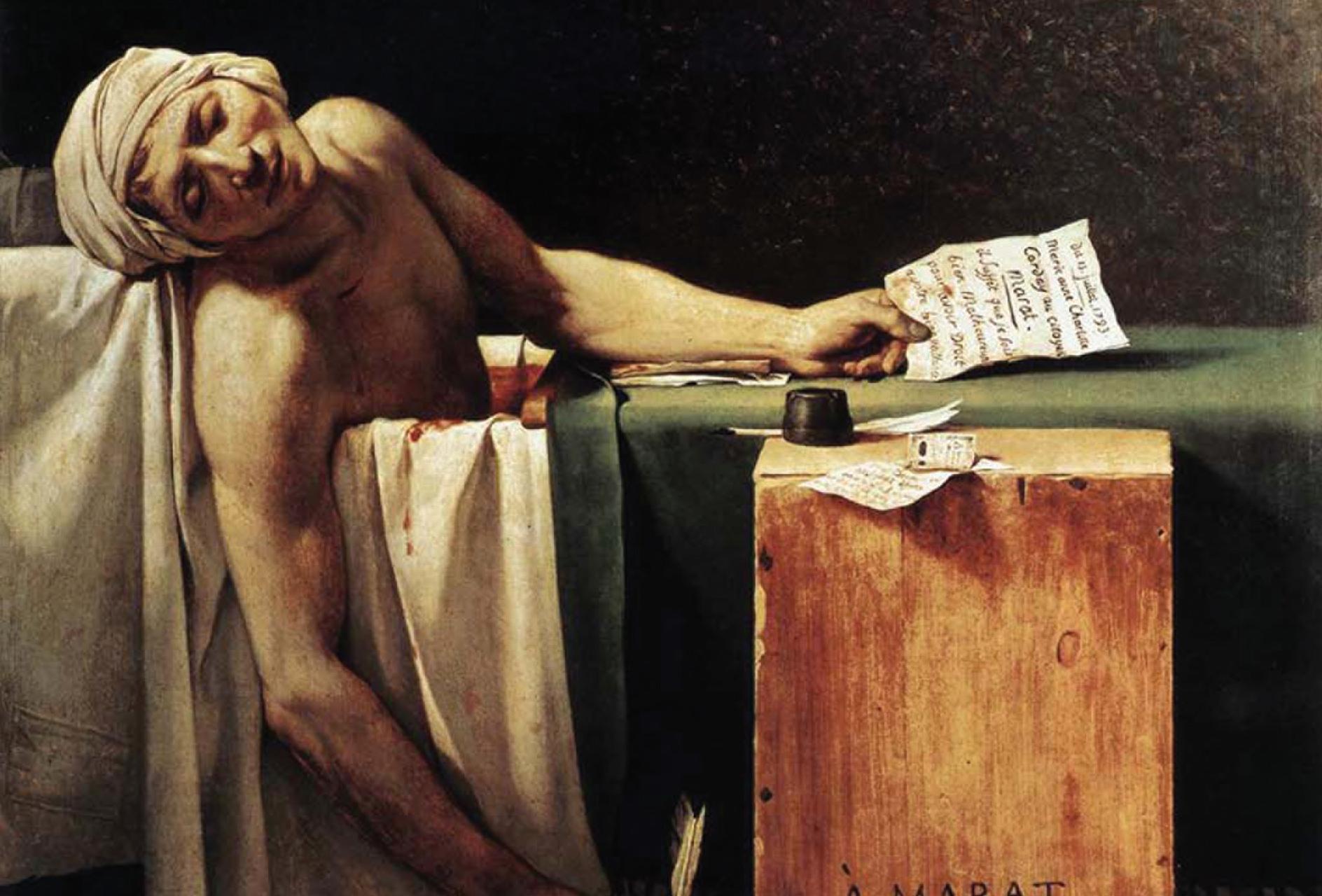
(The Death of Marat by Jacques-Louis David)