


Out of print: The silent collapse of Bihar’s Maithili Academy
With 225 titles, nine Sahitya Akademi award winners, and a stock of 60,000 books locked behind closed doors, a premier publishing house has effectively ceased operations. PrintWeek speaks to one of the last men standing from the Maithili Academy
19 Jan 2026 | By Prabhat Prakash

As it stands, the Maithili Academy is a case study in how not to manage cultural capital
At the Education Department campus in Patna’s Rajendra Nagar, the Maithili Academy sits as a paradox of publishing: it is asset-rich but operationally bankrupt. Established 49 years ago to preserve and propagate Maithili literature, the academy holds the copyright to some of the most critical texts in the language. Yet, for the last three years, its printing presses have been silent, its distribution channels dead, and its sanctioned staff of 21 reduced to one.
The academy is now a ghost publisher, a repository of immense intellectual property (IP) that has become inaccessible to the very market it was built to serve.
The publishing paralysis
For students and scholars, the academy’s collapse has triggered a supply chain crisis. The institution is the primary, and often sole, publisher for over 50% of the Maithili curriculum used in universities across Bihar, Jharkhand, and the Mithilanchal region. It also holds the rights to essential reading material for UPSC and BPSC competitive exams.
With no new titles or reprints released since 2021, the market has shifted to an unregulated grey economy.
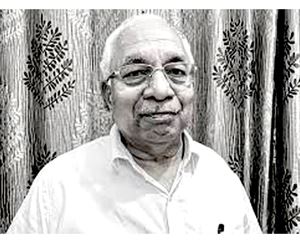
"Students are forced to scavenge for old copies," explains Ramanand Jha (63), the academy's retired head clerk, who served the institution for 21 years. A book that was once sold for INR 200 or INR 250 is now unavailable. Students are borrowing old copies and paying INR 700 to INR 800 just to photocopy them. The demand is there; almost 40 of the academy titles are mandatory course reading, but the funds aren’t available to print the books.
The financial irony is stark. The academy has a proven history of generating revenue through book sales. "In UPSC alone, 25 of our books are standard references," Jha notes. Yet, without a budget for paper or printing, this revenue stream has dried up, leaving students to pay exorbitant prices for unauthorised reproductions while the academy’s official stock of nearly 60,000 books sits in decaying storage.
The last man standing.
The operational decay was not sudden but a gradual emptying out that began decades ago. The academy has a government-sanctioned strength of 21 staff members. Today, that number is effectively one.
Jha witnessed this attrition firsthand. As colleagues retired over the last two decades, no replacements were hired. By the end of his tenure, Jha, originally a head clerk, was forced to assume the role of Prabhari (in charge), managing the responsibilities of an entire publishing house alone.
"As people retired, they didn't bring in replacements," Jha says. "Everything was gradually emptied. When the term of an employee ended, the person remaining was simply handed the charge. I was in personal assistance, but by the end, I was doing the work of the head clerk and the administration. Now that I have retired, there is no one."
The single employee remaining after Jha’s exit has since been deputed to the Secretariat, leaving the academy’s facility, a single room shared with the likes of the Bengali Academy, the Bhojpuri Academy, the Magahi Academy, and the Sanskrit Academy, completely unmanned.
A legacy locked away
The crisis at the Maithili Academy is symptomatic of a broader apathy affecting linguistic institutions in Bihar. Similar bodies for Bhojpuri, Magahi, and Sanskrit are housed in the same complex, suffering from identical neglect, hiring freezes, funding cuts, and crumbling infrastructure. The academy's digital shopfront, its official website, crashed in 2021 due to the lack of maintenance and was never revived.
The state government has proposed a controversial solution: merging all language academies under a single directorate with a rotating panel of experts. However, stakeholders argue that this centralised bureaucratic approach will only accelerate the erasure of specific linguistic identities.
For the human workforce that kept these presses running, the situation is dire. Jha and his retired colleagues are currently fighting a legal battle for their basic dues. "I retired at 60; I am 63 now. We are fighting for our pension and gratuity," Jha says, his voice tinged with resignation. "Some of my colleagues have already passed away waiting for their dues. I have given my whole life to this institute, but now, it is in the hands of God."
The next chapter?
As it stands, the Maithili Academy is a case study in how not to manage cultural capital. It possesses the content, the market demand, and the legacy (including nine Sahitya Akademi-winning titles). What it lacks is the political will to ink the press.
"If the government doesn't pay attention, how will it be printed?" Jha asks, summarising the plight of a publisher that has been forced out of print. "The institute should not be shut down. No one's right should be taken away."





 See All