


GEW at Pamex assesses sheetfed UV opportunities in India
First time at Pamex, GEW's intention is to better understand the potential for sheetfed UV and LED-UV curing in India, with international sales manager Gary Doman outlining where integration, press design and customer confidence remain key factors
29 Jan 2026 | By Noel D'Cunha

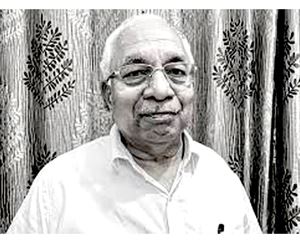
Gary Doman of GEW at Pamex 2026
As interest in UV and LED-UV curing grows beyond narrow-web, GEW, with its first appearance at Pamex is in an assessment mode to find out how ready the Indian sheetfed market is for wider adoption. International sales manager for sheetfed Gary Doman, said the opportunity exists, but integration, press design and customer confidence will determine the pace of uptake.
Doman said GEW was already well established in narrow-web and special UV applications, but the sheetfed segment required a different approach. “The lamp technology is the same whether it is narrow-web, wide-web or sheetfed,” he explained. “The challenge in sheetfed is integration. You have to fit the lamp into a very crowded press environment without interfering with all the moving parts.”
Unlike narrow-web presses, where UV lamps are typically positioned after every print unit, sheetfed presses often require fewer curing units. Doman said a typical six-colour press might use two interdeck lamps and a set of UV or LED-UV lamps at the end of the press, depending on the application. “Sheetfed doesn’t always need as many lamps,” he said. “They are fewer, but they are bigger, and their positioning is critical.”
GEW’s ArcLED technology, which allows interchangeability between UV and LED-UV, was positioned as particularly relevant for sheetfed presses. “The same ArcLED concept we use in narrow-web applies equally to sheetfed,” Doman said. “On newer presses, integration is much easier because they are designed with UV in mind. On older machines, it can be more complex, but it is still possible.”
He noted that curing requirements varied widely based on what customers were producing. Some printers preferred UV or LED-UV on the printing units combined with water-based coating at the delivery, which then required infrared or near-infrared drying. “UV cures ink by polymerisation,” Doman explained. “IR doesn’t cure; it dries. The two are very different, and the configuration depends entirely on the customer’s process.”
Doman acknowledged that GEW’s presence in sheetfed UV in India was still limited, which was one of the reasons for attending Pamex. He pointed to a developing partnership with a German sheetfed press manufacturer, where GEW curing systems were offered as a factory option. “It has taken several years to develop, but it is a very exciting opportunity for us,” he said.
On adoption barriers, Doman said uncertainty around LED-UV remained a concern for some Indian converters. “UV is well established, but LED-UV is still new for many customers here,” he said. “They ask whether supply is reliable, whether it really works, and whether it is sustainable.” He added that wider adoption depended on coordinated support from ink suppliers, press manufacturers and curing system providers.
GEW already had one LED-UV sheetfed installation running in Mumbai, with two more presses expected to be commissioned using a mix of UV and LED-UV. “LED-UV is no longer a niche technology globally,” Doman said. “More than half of our lamp head production is now LED-UV, and that trend will continue.”
For GEW, the visit to Pamex was about timing rather than immediacy. Doman said adoption in sheetfed would move only when converters were confident about integration and long-term support. “UV is already proven, but LED-UV is still being evaluated by many customers here,” he said. “Once printers see stable installations, consistent ink performance and the right level of supplier support, the decision becomes much easier. That is when sheetfed LED-UV will really start to scale in India.”
Tune into PrintWeek Stream to catch all the ground news from Pamex 2026. Click here.



 See All