


Dev Nair: A life that bound the Indian print fraternity
From the Bombay Master Printers Association to the All India Federation of Master Printers, Dev Nair’s leadership rested on trust, conviction and an unshakeable belief in collective purpose. As the Indian printing industry mourns his passing on 24 December 2025, colleagues and friends remember a man who led not from the podium, but from within the fraternity itself
27 Dec 2025 | By Noel D'Cunha

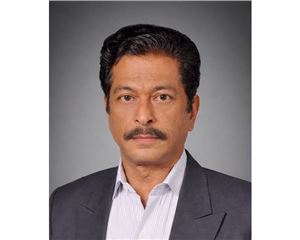
Dev Nair passed away on 24 December 2025
Dev Nair passed away on 24 December 2025, leaving behind a legacy that spans decades of association building, institutional leadership and fraternity-first thinking. A former president of the Bombay Master Printers Association (BMPA) and later president of the All India Federation of Master Printers, Nair belonged to a generation of industry leaders for whom associations were not administrative structures but living ecosystems held together by trust
He served two terms as president of the Bombay Master Printers Association between 2002 and 2004 and again from 2008 to 2009, before going on to lead the All India Federation of Master Printers from 2014 to 2015. During this period, the federation sought to expand its role beyond representation to include education, skills development and a more cohesive national voice for printers across regions.
Those who worked alongside him recall a leader who combined authority with warmth. Faheem Agboatwala, a member of the BMPA who first met Nair nearly 25 years ago at the Bombay Master Printers Association, remembers him as someone who brought energy and intent into every room. “Dev Sahab was a phenomenon,” he says. “He belonged to an era when the printing industry thrived on reputation, relationships, and respect.”
Agboatwala recalls how Nair affectionately referred to younger members as “angsters”, delivered in his distinctive Keralite accent. “Ironically,” he adds, “he himself was the greatest angster among us all.” Whether it was volunteering for initiatives, encouraging participation, or simply being present long after formal meetings had ended, Nair’s enthusiasm rarely dimmed.
Nair’s public interventions often reflected this instinct to look beyond the immediate. In a PrintWeek feature, he described a visit to China as a “pilgrimage for a printer”, arguing that exposure to global manufacturing ecosystems was essential if Indian printers were to think at scale rather than defensively. During his tenure as AIFMP president, he also took firm public positions on issues affecting the fraternity, including condemning violence against print journalists and repeatedly emphasising the need to strengthen print education as a long-term investment, not a cost centre. The same thinking shaped his involvement with Pamex, where he played a stabilising role during a difficult phase, helping rebuild consensus between associations and restore confidence in the exhibition as a unifying platform for the industry.
Anand Limaye, who worked closely with Nair during his AIFMP presidency, remembers him as a leader who absorbed conflict quietly while protecting people and purpose. “Many a times, because of my rough words, I used to hurt people,” Limaye recalls, “but he always used to stand by me.” For Limaye, Nair’s strength lay in his ability to keep teams together even when opinions diverged sharply.
Limaye also recalls Nair’s role during the revival of Pamex, when the exhibition faced a prolonged period of uncertainty. At a critical moment, Nair stepped in as chairman to help restore direction and confidence. “We made Dev Nair chairman,” Limaye says, adding that once decisions were taken, “he stood by us and convinced the managing committee every time.”
Beyond offices held and initiatives led, Nair’s influence lived in the informal spaces of industry life. Agboatwala writes of conversations shared between meetings, moments filled with laughter, advice and what he calls “priceless gyan”. He recalls that Nair, a chain smoker by habit, was often his constant companion at the smoking corner during his own smoking days. “Those moments were filled with laughter, wisdom, and priceless gyan,” Agboatwala notes, adding that the lessons were delivered casually, but remembered deeply.
The timing of Nair’s passing, following personal loss within his family, has added a quiet poignancy to the family’s grief as well as the industry. Limaye remembers him as “very sweet tongued, cool headed and someone who gathered friends naturally”. It is a description echoed across associations and regions.
In his farewell, Agboatwala turns to Maya Angelou to articulate the space Nair leaves behind. “They existed. They existed. We can be. Be and be better. For they existed.” The lines capture a sentiment shared by many in Indian print, that Nair’s absence does not diminish his presence, but reframes it.
Dev Nair’s legacy will not be measured only in offices held, statements issued or events chaired. It will endure in the way the Indian print fraternity continues to argue, reconcile, collaborate and believe that associations still matter. In that sense, his work remains quietly unfinished.
Salaam, Dev Sahab.



 See All