


In printing landscape finishing now decides who scales
India is seeing a steady rise in digital print businesses built around shorter runs, more SKUs (multiple titles), personalisation, and tighter delivery windows. This is no longer a niche behaviour — it’s the operating model
02 Mar 2026 | By Himanshu Mehta

India’s digital printing market was ~USD 1.46-billion in 2023 and is projected to grow at ~9.1% CAGR (2024–2030). Globally, digital printing is also expanding, with one estimate placing the market at ~USD 38.07-billion (2023), projected to ~USD 57.03-billion by 2030. And the demand pull is increasingly “online-to-production”: India’s web-to-print market ~USD 614-million (2024), projected to reach ~USD 899-million by 2030.
That growth story matters because it creates a new baseline on the shopfloor: you can print fast, but if you finish slow, you deliver late. And late delivery is where margins disappear.
Post-press finishing now decides output
Where printing once set a capacity, finishing does so today. Frequent changeovers, mixed-job batches, and compressed schedules expose weak post-press workflows — long setup time (and repeat setups through the day), adjustment runs that create scrap, and manual handling that slows flow and introduces variation.
The most practical levers are still simple, but they must be engineered into the workflow: reduce changeover minutes, cut trial waste, and eliminate repeat manual steps. Improve these, and a shop gains usable capacity immediately — often faster than adding upstream print capacity.
Where SigLoch fits in
SigLoch from Bindwel is built specifically for this new digital production reality — an Indian-made digital post-press brand focused on solving finishing bottlenecks through compact, high-precision cutting and digital-era binding, backed by Bindwel’s engineering and service network.
In simple terms: SigLoch enables printers to finish faster, waste less, change over quicker, and confidently take on short-run, high-mix work without expanding footprint.
Why Indian-made solutions are the pragmatic choice
Imported machines have their place. But for the Indian digital print ecosystem — smaller floors, mixed-job reality, fast support requirements — Indian-made post-press equipment is often the smarter operational choice.
Local engineering typically brings faster spares availability and shorter lead times, quicker field response, and interfaces aligned to Indian operator adoption. In short: capability plus service alignment shortens payback and protects uptime — exactly what growth-stage printers need.
Shop-floor examples that matter
Across recent demos and discussions, the shift we saw was clear: printers were looking for measurable gains, not headline speeds. That means outcomes like fewer adjustments, lower scrap, faster repeatable setups, and the ability to “say yes” to more jobs.
SigLoch Xe-Cut Pro Xtend offers large-format capability without a large-format footprint. A compact digital flatbed cutter that can finish 900 × 600 mm jobs (and beyond) while retaining a 600 × 400 footprint using an intelligent extended table and two-step workflow. When competitors push you to outsource or buy a larger footprint machine, Xtend helps you accept high-value larger-format work without expanding floor space.
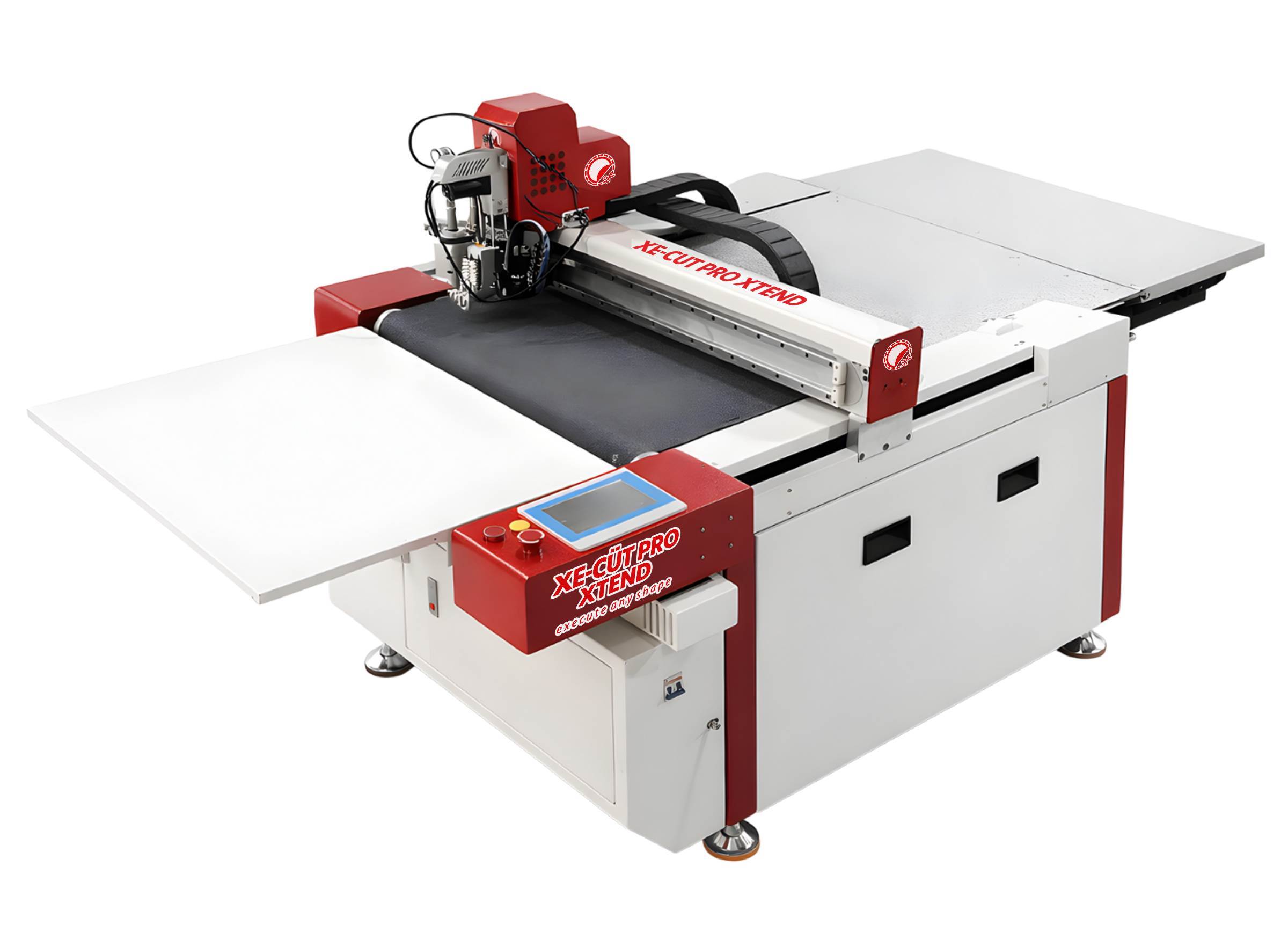
SigLoch Xe-Cut Pro delivers precision cutting across substrates from 100 gsm to 6 mm thickness, with multi-tool flexibility — oscillating knife, V-groove, creasing, kiss-cutting — and camera-based registration. It eliminates the need for bulky offset-format cutters for many digital finishing needs, delivering versatility, space efficiency and cost advantage in one platform.
SigLoch Xe-Cut is designed for short runs without conventional dies — ideal for samples, prototyping and customisation. In real production terms, digital cutters like this help printers move into higher-margin products such as boxes, danglers, standees, labels, calendars and tags — where differentiation is real.
SigLoch Zen brings offset-quality perfect binding for runs of 1, 10, 100 or 1000. Compact, with three-roller gluing, driven side gluing and powerful cover nipping, it addresses the short-run economics and repeatability digital printers require.
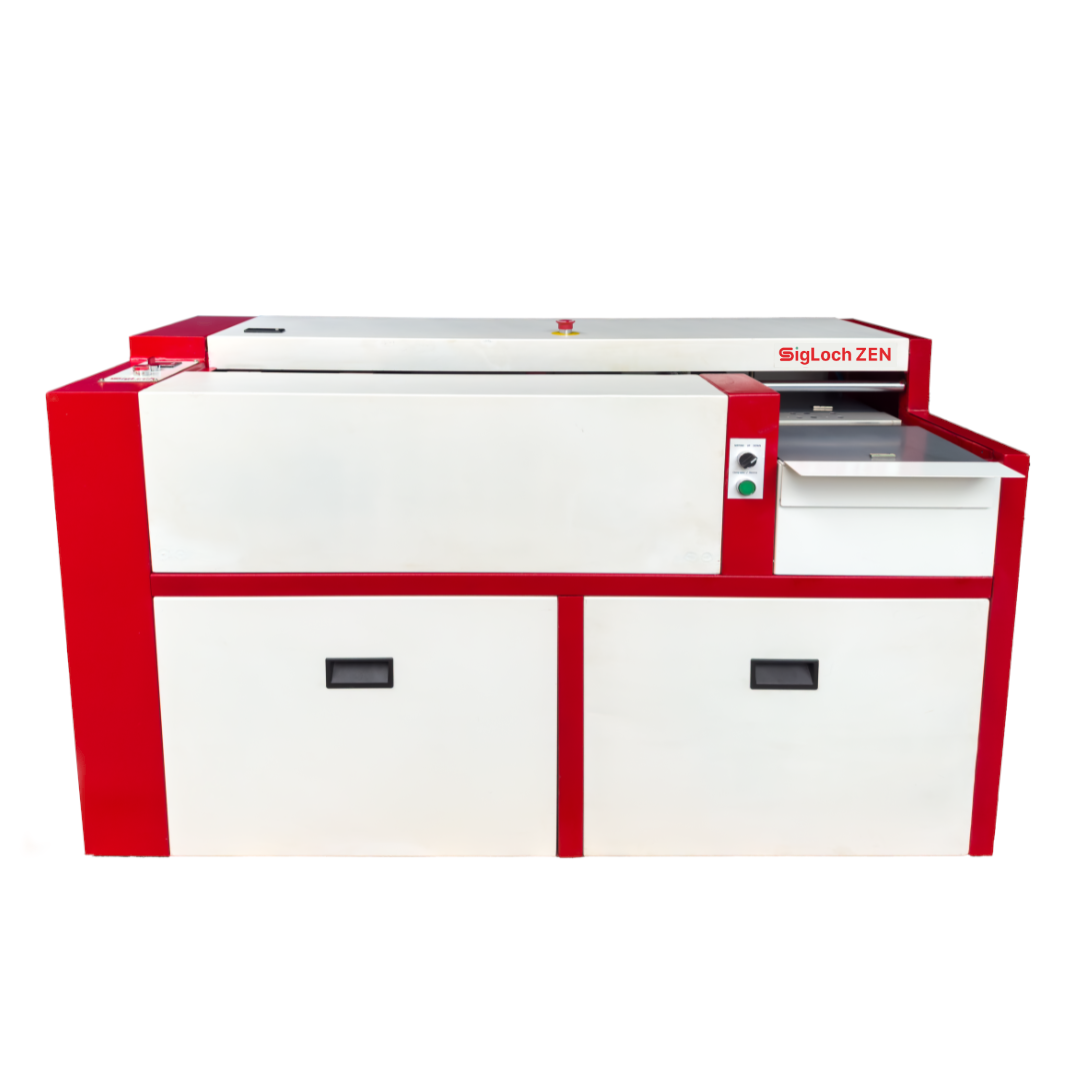
SigLoch 1200 is a three-clamp binder delivering high-end Bindwel book quality for digital runs, with stable, repeatable glue application.
These examples aren’t just specifications — they translate directly into shop outcomes: less rework, less scrap, faster setup-to-output, and more jobs accepted per day.
Designed for real production environments
When equipment is engineered around Indian production realities — compact footprints and simple operator adoption — it helps a shop scale from first jobs to steady volumes. This is exactly why Made in India matters in finishing: it’s not just price; it’s fit plus service plus uptime.
Service and uptime: The overlooked ROI
Automation only pays when machines run. Local service capability—trained engineers and regional service centres—converts installed features into dependable output. Shorter response times and access to genuine spares reduce downtime and protect margins.
Another factor that printers increasingly consider is long-term product continuity. In segments where imported equipment is frequently rebranded or distribution shifts between suppliers, model discontinuation or service uncertainty can become a risk over time. Finishing investments are typically expected to run for a decade or more, and predictable spares availability plays a crucial role in safeguarding that investment.
Established manufacturers with a long product lifecycle philosophy—where even machines installed decades ago continue to receive support and spares—provide an additional layer of operational security. For growing printers, that assurance often weighs as heavily as speed or specifications. This operational reliability is frequently the single biggest determinant of whether automation delivers its expected returns.
What printers should do next
Before buying anything, measure bottlenecks for 7–14 days: Changeover minutes (per job, per shift); Trial-run waste (sheets, boards, re-cuts); and Operator time spent on repeat tasks (setup, alignment, manual finishing steps).
For many growth-stage shops, the right finishing automation improves throughput and reduces unit cost faster than a bigger press investment upstream.
About SigLoch
SigLoch from Bindwel is the digital post-press arm of Bindwel, built on three decades of engineering and service DNA, focused specifically on digital-era finishing and post-print productivity.
If you want to evaluate what finishing upgrade will unlock the fastest gains in your workflow, be it any-shape cutting, binding, or both, the conversation starts with understanding your bottleneck.
Contact: SigLoch from Bindwel. Explore demos, applications, and workflow fitment with our team at Bindwel's official website.
This article was contributed by Sajith Pallipuram, managing director at Stelda Packaging and Bindwel and has been edited to meet the stylesheet of PrintWeek. The views expressed are that of the author.





 See All