


Daily safe, deep cleaning for anilox roller: LaserEcoClean
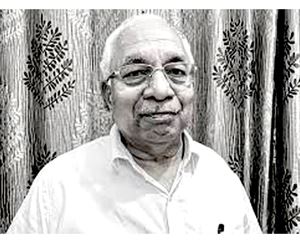
Interacting with PrintWeek, Vasily Burmistrov, director of LaserEcoClean, shares how the patented Single Small Spot Scan technology is capable of vaporising ink at 400°C without ever reaching the 1,500°C ceramic melting point. By replacing cumulative heat with targeted precision, the solution eliminates the mirror effect of bridge melting, preserves ink volume, and provides the 1000x diagnostic proof required to protect and extend the life of anilox rollers.
31 Dec 2025 | By Prabhat Prakash

LaserEcoClean uses a beam-scanning system where a small, single, ultra-short pulse impacts a single point
Anilox maintenance is often a hidden profit drain, where improper cleaning can quietly destroy a USD 300,000 inventory. Vasily Burmistrov, director of LaserEcoClean, introduces a patented Single Small Spot Scan technology that vaporises ink at 400°C without ever reaching the 1,500°C ceramic melting point. By replacing cumulative heat with targeted precision, the solution eliminates the mirror effect of bridge melting, preserves ink volume, and provides the 1000x diagnostic proof required to protect multi-million-dollar production lines.
The surge in India’s flexible packaging sector has brought the Central Impression (CI) Flexo process into the spotlight, but with it comes a hidden profitability killer: improper anilox maintenance. Burmistrov mentions that the Indian market is currently saturated with misinformation regarding laser technology. "The customers are curious, but they don't understand differences," Burmistrov explains, noting that printers often mistakenly believe all laser cleaners are identical. While many believe that any laser will suffice, the wrong equipment can turn a USD 300,000 anilox inventory into scrap metal by significantly reducing its service life.
The science of destruction: Why standard lasers fail
The silent killer of flexo profitability is ceramic melting. Conventional laser systems often rely on beam-scanning methods where multiple pulses hit the same spot or on using one-spot technology bigger than 200 microns. All these methods unevenly deliver the laser energy to the anilox surface. As a consequence, the ceramic surface overheats to 1,500°C, melting the fine microstructures on the bridge walls, which measure only one to three microns.
"The laser radiation begins to melt the microstructures... as a result, elements of approximately two microns disappear," Burmistrov notes. This laser polishing creates a mirror-like appearance that reflects more light, often fooling operators into thinking the roll is cleaner, when in reality the cell edges have melted, bridge widths have increased, and ink transfer volume has plummeted.
The LaserEcoClean patent: Precision over power
LaserEcoClean’s differentiator is its patented Single Small Spot Scan technology. Unlike competitors that may apply between five and 15 pulses to the same point or one dot bigger than 200 microns, LaserEcoClean uses a beam-scanning system where a small, single, ultra-short pulse impacts a single point.
"The energy of a single pulse is sufficient to evaporate the ink (400°C) but not enough to melt the ceramic of the roller (1,500°C)," Burmistrov clarifies. This precision is maintained by high-precision motion systems and a rotation system featuring minimal radial run-out, ensuring focal accuracy down to 10 microns across the entire length of the roller.
The strategic partnership
In the Indian market, this technology is supported by Flexitest Printing Solutions. Driven by a commitment to collaborative, sustainable solutions, Flexitest is expanding its footprint in the Indian packaging industry.
Ravi Fotedar of Flexitest explained, "What this technology does for the converter is that it simplifies the process. It automates the cleaning process of the anilox rollers without human intervention." He emphasises that Flexitest operates as a partner, not merely a transactional seller. "We have a strong R&D base, and we work very closely with the brands and with the converters... Our job is to listen to the converters who have a very high degree of understanding of the processes."
High-magnification: The true safety audit
Burmistrov insists that standard 200x magnification is insufficient for high-line screen rolls. To detect the first stages of melting, LaserEcoClean provides an inspection system capable of up to 1000x magnification.
"With 200 times magnification... you will not be able to see it. With 800 times, especially if we are talking about high-line screen rolls, you will be able to see it," he says. This allows engineers to verify that microstructures remain intact even after 60 consecutive cleaning cycles, a stress test that would cause standard laser systems to liquify the ceramic bridges.
Automating safety for the Indian workforce
The transition to automated laser cleaning also eliminates the human factor and the hazards of manual scrubbing. Traditionally, cleaning is considered dirty work involving toxic chemicals; however, LaserEcoClean equipment is fully autonomous. "Every roll is assigned... the operator just has to press the letter and the digit, and everything happens automatically," Burmistrov notes regarding the one-touch control system. Furthermore, the system includes a cloud-based database that stores machine parameters and cleaning results for every roll, ensuring total transparency for management.
A proven standard of excellence
With 15 years in the market and over 60 machines installed worldwide, LaserEcoClean has zero safety-related complaints. In India, pioneers like Mehta Flex have already commissioned its second unit, confirming the technology's reliability and return on investment. Burmistrov concludes, "Our engineers have invested tremendous effort into developing a safe, precise, and reliable machine... because we understand that we are responsible for the money you have invested in your anilox inventory.”


 See All